
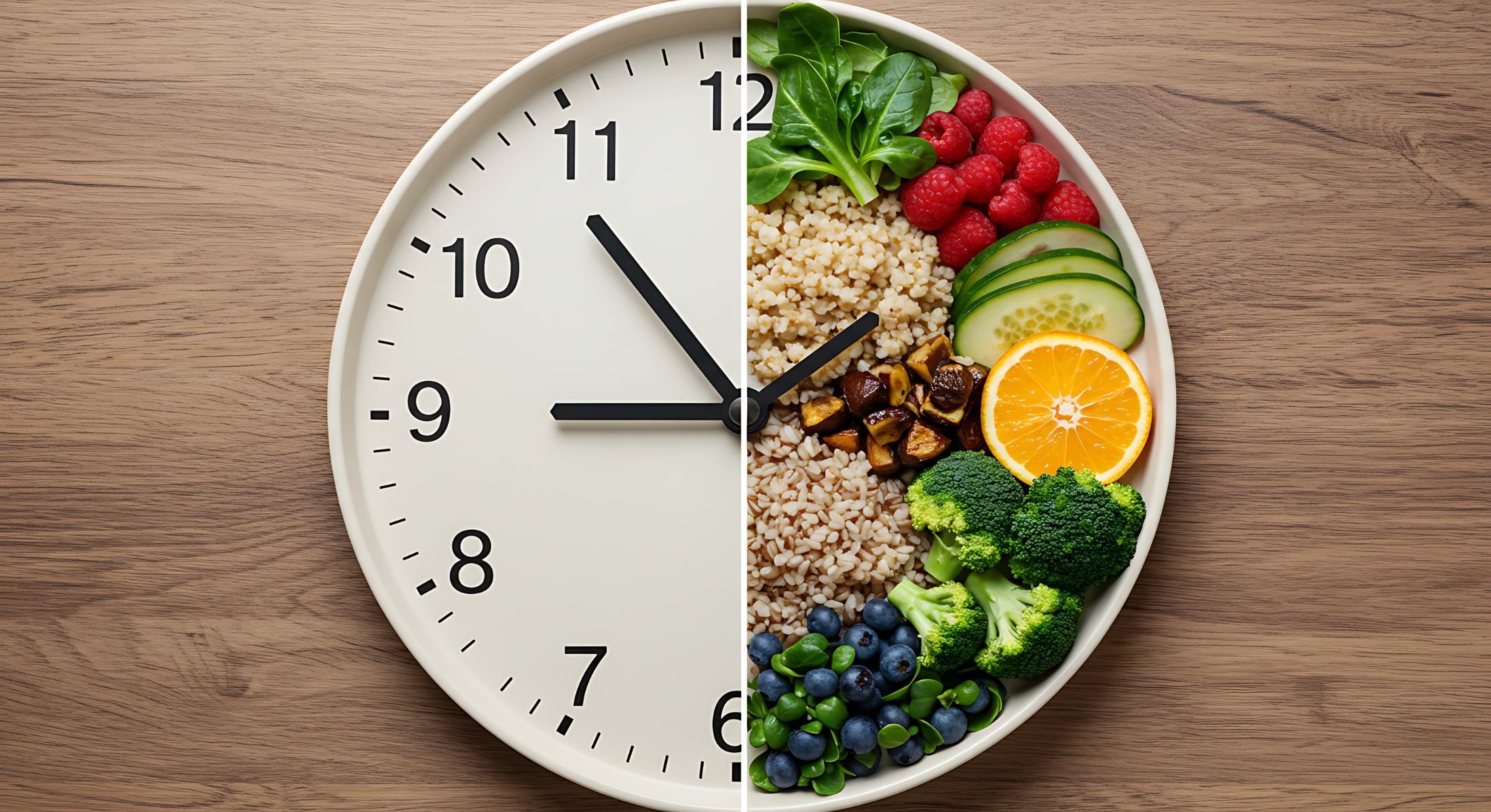
Much of nutrition advice focuses on what we eat, but when we eat can be just as important. Intermittent fasting has gained attention as a way to support weight management and gut health. But does it really work, and is it safe for everyone?
Definition and types of intermittent fasting
Intermittent fasting means deliberately not eating, or eating less, for certain periods of time. Common approaches include:
- Time-restricted eating: eating only during a set daily window, e.g., 8 hours.
- Alternate-day fasting: alternating between a day of eating and a day of fasting.
- Modified fasting: reducing calorie intake 1–2 days per week while eating normally on other days.
- Religious fasting: for example, Ramadan, where food is avoided during daylight hours.
Even though these methods differ, they all create repeated periods without food. These fasting periods trigger natural responses in the gut, metabolism, and hormone systems that may support health.
Can intermittent fasting benefit gut health?
Intermittent fasting starts a chain of changes in the body that unfold over a fasting–feeding cycle, beginning in the gut and extending to metabolism, hormones, and the immune system.
a. The fasting phase: gut rhythm, repair and metabolic switching
When we stop eating, our body’s internal clock resets. The gut also activates a natural “clean-up” process called the migrating motor complex. This is a series of gentle contractions that sweep leftover food and bacteria from the small intestine into the colon. This may help prevent bacterial overgrowth in the small intestine where it should not happen, a problem seen in people with small intestinal bacterial overgrowth (SIBO)1.
Fasting gives the gut time to repair. With less food passing through, gut cells have time to recover, inflammation is reduced, and the immune system is supported2. These effects could help people manage their weight when Crohn’s disease (a form of IBD) is present as a comorbidity, but fasting should be approached carefully to avoid malnutrition or symptom flare-ups3.
After 10–14 hours without food, the body switches from using sugar (glucose) to fat for energy. It results in ketone bodies, which is the concept behind the ketogenic diet. These ketones fuel the body, send signals that reduce inflammation and protect gut cells, support metabolism and energy regulation4.
b. Nutrients reaching the colon: gut bacteria, fermentation, and appetite
Intermittent fasting often increases microbial diversity5 (more different types of bacteria), which is linked to better metabolism and lower body fat6. It also increases beneficial bacteria, like Faecalibacterium prausnitzii and Akkermansia muciniphila, and reduces pathogens7. When food finally reaches the colon, leftovers that escaped digestion are fermented by gut bacteria into short-chain fatty acids (SCFAs), which are beneficial for the gut. The gut microbiome also follows a daily rhythm. Daytime feeding encourages SCFA-producing bacteria, while overnight fasting supports other beneficial bacterial activities. SCFAs strengthen the intestinal barrier, reduce inflammation, and stimulate gut hormones which signal fullness. This helps control appetite, reduce snacking, and improve blood sugar levels4.
Are there risks?
How you break the fast matters. Indeed, very large meals or highly processed foods can overload digestion, slow stomach emptying, and reduce mineral absorption (iron, zinc, calcium). Repeatedly eating high-sugar or low-fiber foods can also weaken gut microbiota and reduce the beneficial effects from the intermittent fasting. Some people may overeat after long fasting periods, especially with very tasty or large meals, which can reduce the benefits of fasting.
This is particularly important for people with irritable bowel syndrome (IBS) or other gut disorders8, who may feel bloated or uncomfortable with large meals. Evidence in IBD is mixed3, with some studies suggesting modest improvements in inflammation and others showing little effect or potential risks. People with eating disorders are at particular risk of harmful behaviours if fasting is attempted without supervision.
Conclusion
Current evidence suggests that early time-restricted eating, where food is consumed earlier in the day, produces the most consistent benefits9. However, intermittent fasting is not a magic solution and should not replace a balanced diet or lifestyle. For long-term health, the most effective approach is one that can be maintained over time and integrated into a balanced lifestyle. Extended fasting protocols should only be undertaken with medical or dietetic supervision10, and intermittent fasting is not appropriate for everyone. Individuals with diabetes, eating disorders, hypotension, during pregnancy or lactation, or those engaged in high-intensity training should seek professional guidance or avoid fasting altogether.
References:
- Pimentel, M., Soffer, E.E., Chow, E.J. et al.Lower Frequency of MMC Is Found in IBS Subjects with Abnormal Lactulose Breath Test, Suggesting Bacterial Overgrowth. Dig Dis Sci 47, 2639–2643 (2002). https://doi.org/10.1023/A:1021039032413
- Guevara‑Cruz, , Hernández‑Gómez, K. G., Condado‑Huerta, C., González‑Salazar, L. E., Peña‑Flores, A. K., Pichardo‑Ontiveros, E., Serralde‑Zúñiga, A. E., Sánchez‑Tapia, M., Maya, O., Medina‑Vera, I., Noriega, L. G., López‑Barradas, A., Rodríguez‑Lima, O., Mata, I., Olin‑Sandoval, V., Torres, N., Tovar, A. R., & Velázquez‑Villegas, L. A. (2024). Intermittent fasting, calorie restriction, and a ketogenic diet improve mitochondrial function by reducing lipopolysaccharide signaling in monocytes during obesity: A randomized clinical trial. Clinical Nutrition, 43(8), 1914‑1928. https://doi.org/10.1016/j.clnu.2024.06.036
- Haskey N, Ye J, Lewis A, Yousuf M, Reimer RA, Raman M. Time-Restricted Feeding Reduces Body Mass Index, Visceral Adiposity, Systemic Inflammation, and Clinical Disease Activity in Adults With Crohn’s Disease: A Randomized Controlled Study. Gastroenterology. 2026 Feb 9: S0016-5085(25)06485-6. doi:10.1053/j.gastro.2025.11.008.
- Paukkonen, I., Törrönen, E.-N., Lok, , Schwab, U., & El‑Nezami, H. (2024). The impact of intermittent fasting on gut microbiota: A systematic review of human studies. Frontiers in Nutrition, 11, 1342787. https://doi.org/10.3389/fnut.2024.1342787
- Ashique, S., Debnath, B., Mojgani, N., Tariq, M., Haider, T., Shorog, E., Yasmin, S., Islam, A., Sharma, H., Hussain, M. S., Madan, A., Malik, T., & Ansari, M. Y. (2025). Gut microbiota modulation and health benefits of various fasting regimens. Current Research in Biotechnology, 10, 100311. https://doi.org/10.1016/j.crbiot.2025.100311
- Mohr, A. E., Sweazea, K. L., Bowes, D. A., Jasbi, P., Whisner, C. M., Sears, D. D., Krajmalnik-Brown, R., Jin, Y., Gu, H., Klein-Seetharaman, J., Arciero, K. M., Gumpricht, E., & Arciero, P. J. (2024). Gut microbiome remodeling and metabolomic profile improves in response to protein pacing with intermittent fasting versus continuous caloric restriction. Nature Communications, 15, 4155. https://doi.org/10.1038/s41467-024-48355-5#
- Pérez-Gerdel, T., Camargo, M., Alvarado, M., & Ramírez, J. D. (2023). Impact of intermittent fasting on the gut microbiota: A systematic review. Advanced Biology, 7(8), Article 2200337. https://doi.org/10.1002/adbi.202200337
- Mikhael-Moussa, H., Bertrand, V., Lejeune, E., Dupont, C., Aupetit, A., Achamrah, N., & Melchior, C. (2025). The Association of Avoidant/Restrictive Food Intake Disorder (ARFID) and Neurogastroenterology Disorders (Including Disorders of Gut-Brain Interaction [DGBI]): A Scoping Review. Neurogastroenterology and Motility, 37(9), e70039. https://doi.org/10.1111/nmo.70039
- Liu, J., Yi, P., Liu, F. (2023). The Effect of Early Time-Restricted Eating vs Later Time-Restricted Eating on Weight Loss and Metabolic Health. The Journal of Clinical Endocrinology & Metabolism, 108(7):1824–1834 https://doi.org/10.1210/clinem/dgad036
- Roco-Videla, A., Aguilera-Eguía, R., Olguín-Barraza, M., & Flores, S. (2025). The importance of performing intermittent fasting under the supervision of a nutrition professional. Nutrición Hospitalaria, 42(4), 843–844. https://doi.org/10.20960/nh.05904