
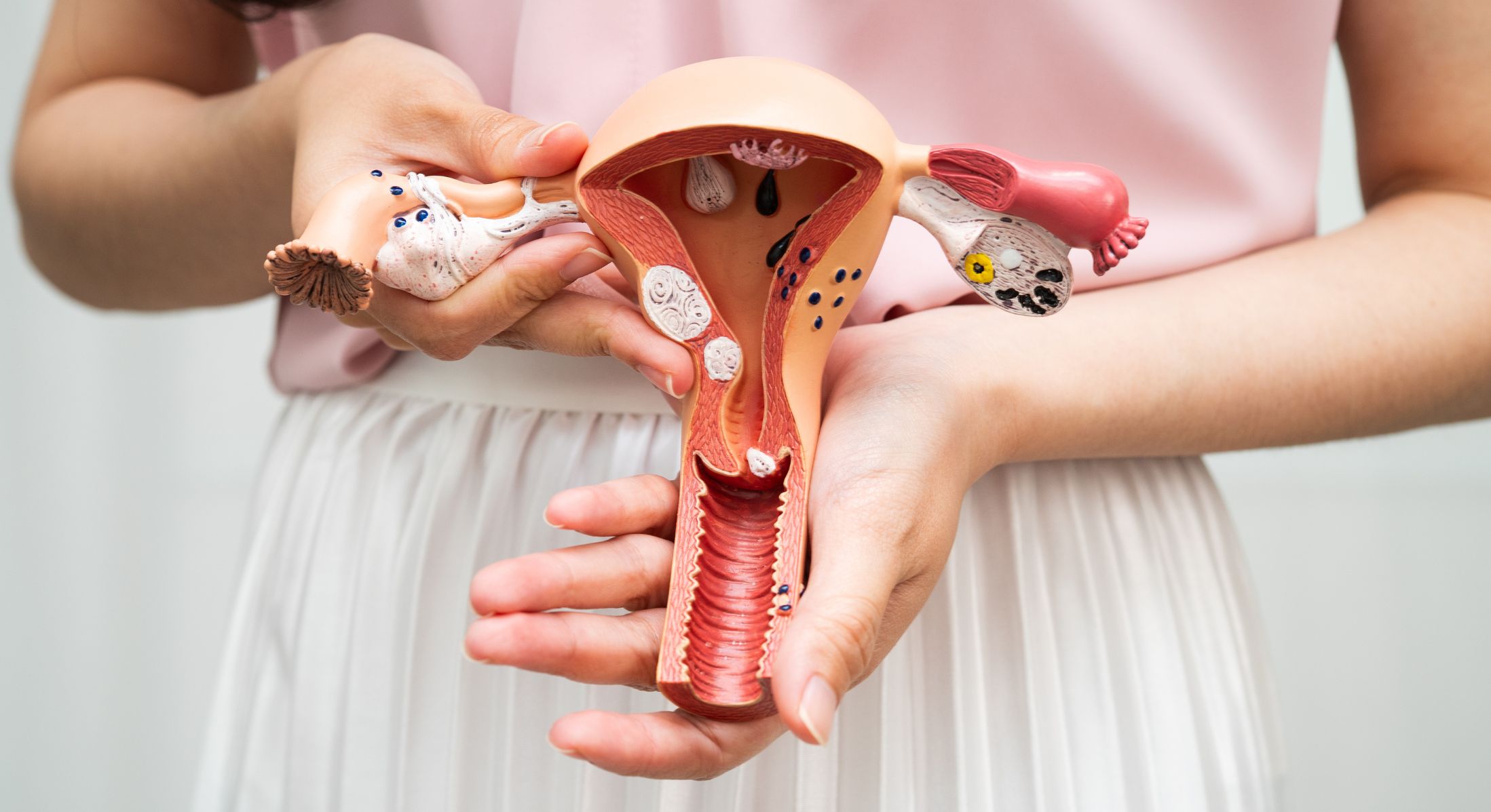
Although discussions around menopause often focus on hormones, menopause does not begin and end in the ovaries. This natural transition, which occurs between the ages of 45 and 55 as women move beyond their reproductive years, affects numerous organs and systems and, as recent scientific studies have begun to show, also leaves its mark on another important ecosystem: the gut microbiota.
As estrogen levels fluctuate and decline during perimenopause, the composition and diversity of gut microorganisms begin to change. Although this complex relationship is not yet fully understood, as it has only recently begun to be studied, we know that estrogens influence the microbiota and, in turn, that the microbiota is involved in the metabolism of these hormones, with potential implications for immune function, metabolism, bone health and brain health. However, it remains difficult to disentangle which changes are related to hormonal shifts and which are linked to aging, diet, medication or other factors.
“Unfortunately, so far very little funding has gone into in-depth research on issues related to women’s health,” says Dr. Mireia Vallès-Colomer, principal investigator of the Microbiome Research Group at Pompeu Fabra University (UPF). “There are no studies showing exactly what happens to the microbiota during menopause.”
How do estrogen and the gut microbiota interact?
To start addressing this knowledge gap, Vallès-Colomer has launched a project focused on endometriosis that investigates the relationship between sex hormones and the microbiota, with the aim of better understanding this dialogue. Early results suggest that some bacteria can metabolize endogenous estrogens, as well as estrogens from hormone treatments and phytoestrogens found in certain foods. “We know that the microbiota can metabolize them. What we still don’t have is a complete list of which bacteria are responsible for doing so,” Dr. Vallès-Colomer explains.
In this context, the so-called estrobolome plays a key role. It refers to the collection of bacterial genes capable of metabolizing female hormones, which are produced mainly in the ovaries and, to a lesser extent, in other tissues. Some gut bacteria can recycle estrogens that arrive from the liver and return them to the bloodstream, which, in certain contexts, could be beneficial during menopause.
However, it is still unclear to what extent differences in bacterial estrogen metabolism alter estrogen levels in the body, or how the microbiota could be targeted to achieve clinical benefits, Dr. Vallès-Colomer points out.
Dr. Juan Carlos Espín, a CSIC research professor at CEBAS-CSIC in Murcia, also studies this relationship. In a recent paper, he reviewed how medications taken long term can modify gut bacteria associated with the estrobolome and, consequently, the enzymes involved in estrogen metabolism. The analysis points to potential effects of drugs such as metformin, statins and some antidepressants on these bacteria, although it emphasizes that no studies have yet directly assessed how these treatments modify estrobolome activity in postmenopausal women.
Menopause is not the only factor shaping the gut microbiota
Moreover, changes in the microbiota cannot be attributed solely to menopause. Age, weight, physical activity, diet and medications also influence it. Along these lines, a 2025 analysis of the ZOE PREDICT 3 cohort, led by researchers at King’s College London and the University of Trento in Italy and involving 70,399 peri- and postmenopausal women, found a moderate association between the gut microbiota and the overall severity of menopausal symptoms. These included both physical symptoms—such as fatigue, weight gain or a feeling of having a slow metabolism—and psychological symptoms, such as anxiety or mood changes. More than 32 bacterial species or groups appeared among the main predictors, but this was an association, not a cause-and-effect relationship.
“What matters is understanding what bacteria do and how they interact with hormones, diet, lifestyle or medications,” Dr. Espín explains. He also stresses that “it’s not just about which bacteria are there, but how they function. In healthy women who are not taking medication, when we compare 120 women of reproductive age with 90 menopausal women, we see that the overall composition is not radically different. There is no major dysbiosis, although functional differences do emerge. This adds nuance to the idea that the hormonal changes of menopause necessarily involve a profound alteration of the microbiota.” All these factors modify the microbiota, making it difficult to attribute changes solely to menopause, he says.
What can we do while the science continues to advance?
Researchers do not suggest trying to “repair” the microbiota, but rather taking care of it. A healthy diet rich in vegetables, whole grains and fermented foods such as yogurt or kefir, together with physical activity, good sleep and stress management, are among the recommendations highlighted by both Dr. Vallès-Colomer and Dr. Espín. They also recommend limiting ultra-processed foods and alcohol and using antibiotics only when necessary.
Phytoestrogens, found for example in soy and flaxseeds, are also attracting interest. Some bacteria can transform daidzein from plant foods such as soy into equol, a compound derived from these foods with some estrogenic activity. However, not all women have the bacteria capable of producing it.
The latest research by Espín’s team explores how these individual differences in the microbiota could help advance precision health. In a trial involving postmenopausal women, they studied how certain polyphenols—bioactive compounds found in plant foods—could influence TMAO, a molecule associated with cardiovascular and metabolic health. The response was not the same in all women and depended, in part, on the characteristics of their microbiota and their ability to produce compounds such as equol and urolithin A.
These findings suggest that the microbiota could help explain why the same nutritional intervention does not have exactly the same effect in everyone. However, we are still a long way from being able to make personalized recommendations based on each woman’s gut bacteria.
For now, there is no miracle diet or formula for “repairing” the microbiota during menopause. The evidence points to something much simpler: taking care of it during this stage of life through the same habits that support good overall health, while continuing to investigate how gut bacteria interact with hormones throughout this stage.
References:
Kim C, Asnicar F, Marples L, et al. Associations between gut microbiota and menopause symptoms: novel insights from the ZOE PREDICT 3 cohort. Proceedings of the Nutrition Society. 2025;84(OCE3):E243. doi:10.1017/S0029665125101122
Jarrín-Orozco MP, García-Nicolás M, Romo-Vaquero M, et al. Precision health targeting TMAO in postmenopausal women: polyphenol effects modulated by urolithin A and equol metabotypes in a randomised, placebo-controlled crossover trial. Food Funct. 2026;17(4):2037-2049. Published 2026 Feb 23. doi:10.1039/d5fo05461c
Vriend, E.M.C., Galenkamp, H., Herrema, H. et al. Machine learning analysis of sex and menopausal differences in the gut microbiome in the HELIUS study. npj Biofilms Microbiomes 10, 152 (2024). https://doi.org/10.1038/s41522-024-00628-z
García-Nicolás M, Jarrín-Orozco MP, Romo-Vaquero M, et al. Dietary (poly)phenols, the gut-brain axis, and menopause: a perspective on an overlooked biological crossroad. Food Funct. 2026 May 12;17(9):3854-3870. doi: 10.1039/d6fo00429f
https://www.nhs.uk/conditions/menopause-and-perimenopause/symptoms/